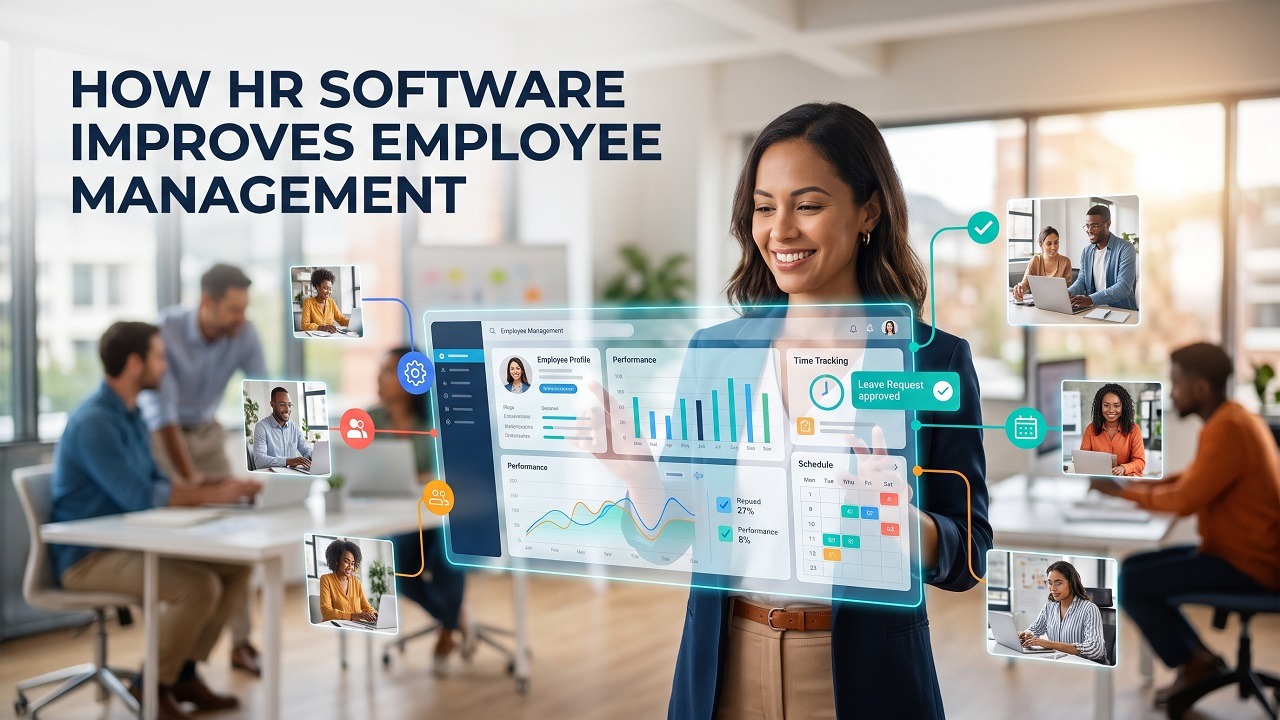
Understanding how HR software improves employee management starts with a simple observation: most HR problems are not people problems. They are process problems. Missed leave records, payroll errors, scattered files, and slow approvals drain time from HR teams and frustrate staff.
HR software replaces those scattered tasks with a single, organized system. This article explains what HR software in Bangladesh does, where it helps most, and what to check before you choose a platform.
Why Manual HR Processes Fall Short
Spreadsheets and paper files work when a company has ten employees. They begin to fail at fifty and become a liability at two hundred. Common problems include:
- Employee records stored in different files, folders, and inboxes
- Attendance and leave tracked on paper or in separate sheets
- Payroll calculated by hand, with a high risk of formula errors
- No clear history of promotions, warnings, training or appraisals
- Slow approval chains that depend on someone being at their desk
Each of these costs money. An incorrect salary, a missed contract renewal, or a lost document can lead to disputes, penalties, and lower morale. Modern HR software in Bangladesh exists to remove these weak points by keeping every employee record in one place.
How HR Software Improves Employee Management Across the Employee Lifecycle
The clearest way to see how HR software improves employee management is to follow an employee from hiring to exit. Every stage has tasks that can be standardized and automated.
Hiring and Onboarding
Hiring usually begins with a pile of CVs scattered across inboxes and folders. A recruitment module gives HR one place to post a job, collect applications, shortlist people, and keep interview notes, so nothing gets buried. When a candidate says yes, their details move straight into a new employee profile, and nobody has to type them again.
The new hire fills in forms and uploads documents online, often before the first day. Their manager gets a short checklist for the laptop, the email account, and the orientation. It sounds like small stuff, but it decides whether a new joiner spends day one waiting around or actually starting work.
Attendance and Leave Management
Attendance tools record check-ins through biometric devices, mobile apps, or web portals. Leave requests move through an approval flow, and balances update on their own. Managers can see who is absent before approving another request, which prevents understaffing. Late arrivals, overtime, and shift changes are all recorded without a single manual entry.
Payroll Processing
Payroll is where HR software delivers its most visible return. Payroll software in Bangladesh pulls attendance, leave, overtime, and deductions into one calculation, then generates payslips and salary reports. Tax deductions, provident fund contributions, allowances, and bonuses follow the rules you configure once. Fewer manual steps mean fewer mistakes, and employees receive accurate pay on time.
Performance and Development
Performance modules help managers set goals, run appraisal cycles, and record feedback throughout the year rather than only at review time. Because the history is stored in the system, promotion and pay decisions rest on documented performance instead of memory. Training records and skill profiles also help HR plan development programs that match real gaps.
Better Data Leads to Better Decisions
Another practical example of how HR software improves employee management is reporting. When every record lives in one database, leaders can answer questions that were previously guesswork:
- Which departments have the highest turnover?
- How much overtime is being paid each month, and where?
- Which roles take the longest to fill?
- How does absenteeism change across seasons?
Dashboards turn raw records into charts and trends. Instead of spending a week assembling a report, HR can pull it in minutes. Management then spends its time acting on the numbers, not hunting for them. For growing companies, this visibility is often the difference between reacting to problems and preventing them.
Compliance and Record Accuracy
Labour regulations, tax rules and contract terms demand careful documentation. HR software keeps employment contracts, working hours, leave entitlements and payroll history in a structured format. Many platforms send alerts for contract expiries, probation endings and statutory deadlines. If an audit or dispute arises, retrieving the right record takes seconds.
Access controls matter just as much. Role-based permissions ensure that salary details are visible only to authorized people, and audit logs show who changed what and when. That level of control is difficult to achieve with shared spreadsheets.
Employee Self-Service Builds Trust
Employees should not have to ask HR for every small detail. Self-service portals let staff view payslips, check leave balances, update personal information, submit requests, and download letters at any time. This shows how HR software improves employee management from the employee’s side too: people feel informed and respected when answers are available without a queue.
HR teams benefit as well. When routine questions disappear, they can focus on work that needs judgment, such as workforce planning, conflict resolution, culture, and retention.
Cost and Time Savings You Can Measure
The savings show up in places you can actually count. Payroll that used to eat two or three days at the end of every month often gets done in an afternoon. Errors drop too, because the system does the overtime and leave math instead of a tired person with a calculator at 9 pm. And since the same routine work no longer piles up, a small HR team can look after a bigger workforce without burning out.
Retention is harder to put a number on, but it matters most. People stay longer when their pay is right, their leave requests don’t disappear, and their records are fair. Replacing one experienced employee usually costs far more than a year of software fees, so even a small drop in turnover can pay for the whole system.
Common Mistakes to Avoid
Software can’t fix a broken process; it only speeds it up. Many companies skip the step of writing down how approvals actually work, then wonder why the system feels wrong. Others import old spreadsheets full of duplicates and missing details, and the errors move straight into the new database.
Clean your records first. Agree on approval rules before setup. And if your organization is large, don’t switch everyone on one day. Run a pilot with a single department for a few weeks, fix what breaks, then roll out to the rest.
Final Thoughts
To summarize how HR software improves employee management: it centralizes records, automates repetitive work, improves payroll accuracy, supports compliance, gives leaders reliable data, and gives employees direct access to their own information. These benefits compound as a company grows, since the system scales with headcount instead of demanding more paperwork.
If your HR team spends more time chasing information than supporting people, it is probably time to review your tools. Start by listing your biggest pain points, compare HR software against that list, and test the shortlisted options with real scenarios. The right system will make daily HR work lighter and employee management more consistent, accurate, and fair.